
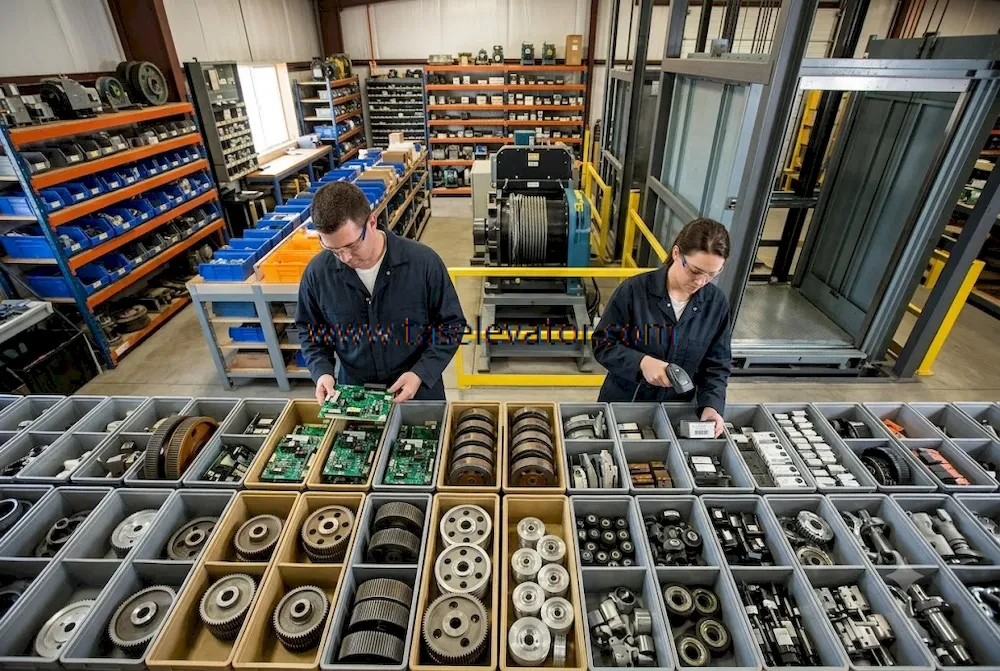
Elevator maintenance companies need many different spare parts every year. Some parts are used for regular service. Some parts are replaced when an elevator has a fault. Some parts are bought in advance because they are easy to wear out.
For B2B buyers, knowing the most common elevator parts is very helpful. It helps maintenance companies prepare stock, reduce repair time, and serve customers faster.
Elevators work every day in office buildings, apartments, hotels, shopping malls, hospitals, and public places. Because they run many times a day, some parts will slowly wear out. If these parts are not replaced in time, the elevator may become noisy, unstable, or stop working.
In this article, we will explain the elevator parts that maintenance companies buy most often, and why these parts are important.
Elevator Door System Parts
Door system parts are among the most frequently purchased elevator spare parts. This is because elevator doors open and close many times every day. In many buildings, the door system works more often than any other part of the elevator.
If the door system has a problem, passengers may not be able to enter or leave the elevator safely. A small door problem can also cause the elevator to stop service.
Door Rollers
Door rollers are very common replacement parts. They help the elevator door move smoothly along the track. After long use, rollers may become worn, loose, or noisy.
When door rollers are damaged, the door may shake, make noise, or fail to close correctly. Maintenance companies often keep door rollers in stock because they are used in many repair jobs.
Door Shoes and Guide Shoes
Door shoes help guide the elevator door during opening and closing. They keep the door in the correct position. If door shoes are worn out, the door may move unevenly or rub against other parts.
These parts are small, but they are very important for stable door movement.
Door Motors and Door Operators
Door motors and door operators control the movement of elevator doors. If the door motor is weak or damaged, the door may open slowly, close slowly, or stop moving.
These parts are more expensive than rollers or shoes, but maintenance companies still buy them often because door operation is very important for elevator safety and comfort.
Elevator Push Buttons and Display Parts
Push buttons and display parts are also common elevator parts. Passengers use these parts every day. Because they are touched often, they can become worn, broken, or unresponsive.
In many repair cases, the elevator itself may still work well, but the button or display has a problem. Replacing these parts can improve user experience quickly.
Landing Call Buttons
Landing call buttons are installed outside the elevator, usually near the elevator door on each floor. Passengers press them to call the elevator.
These buttons are used very often, especially in busy buildings. Over time, the button surface may be damaged, the light may stop working, or the button may not respond.
Car Operating Panel Buttons
Car operating panel buttons are inside the elevator cabin. They include floor buttons, door open buttons, door close buttons, alarm buttons, and other control buttons.
Maintenance companies often buy these buttons because they are easy to damage and need to match the elevator model and panel design.
LED Displays and Indicators
LED displays show the floor number, direction, or elevator status. When the display fails, passengers may not know where the elevator is going.
Display parts are often replaced to keep the elevator clear, modern, and easy to use.
Elevator Sensors and Switches
Sensors and switches are small parts, but they play a big role in elevator safety and control. Maintenance companies often buy them because they are used in many elevator systems.
When a sensor fails, the elevator may show an error code, stop running, or work incorrectly.
Door Sensors
Door sensors help detect whether there is an object or person near the door. They help prevent the door from closing on passengers.
If the door sensor has a problem, the door may keep opening, fail to close, or close at the wrong time. This can affect safety and daily operation.
Limit Switches
Limit switches are used to detect positions in the elevator system. They help the controller know where a part is and whether it has reached the correct position.
These switches are widely used in door systems, shaft systems, and control systems. Because of this, maintenance companies often need replacements.
Photoelectric Sensors
Photoelectric sensors are used in many elevator applications. They can detect objects, movement, or position. When they become dirty or damaged, the elevator may not receive the correct signal.
Replacing a sensor can often solve a fault quickly.
Elevator Control System Parts
The control system is like the brain of the elevator. It manages movement, speed, signals, door operation, and safety functions. Control system parts are very important for elevator repair.
These parts are usually more technical. Before ordering, buyers should confirm the model number, brand, voltage, software version, and connector type.
Control Boards
Control boards are one of the most important parts in the elevator system. They receive signals and send commands to different elevator components.
If a control board fails, the elevator may stop working or show error codes. Maintenance companies may buy control boards for urgent repair or backup stock.
Relay Boards
Relay boards help control electrical signals. They are used in many elevator systems. When a relay board has a problem, some functions may not work correctly.
For maintenance companies, having the correct relay board can reduce downtime.
Inverters and Drives
Inverters and drives control the motor speed. They help the elevator start, stop, and move smoothly.
If the drive has a problem, passengers may feel shaking, sudden stops, or unstable movement. These parts are usually more expensive, so buyers should carefully confirm the model before ordering.
Elevator Rollers and Guide Components
Rollers and guide components are common wear parts. They help the elevator move smoothly and reduce vibration. After long use, they may become worn or noisy.
Maintenance companies often buy these parts because they are needed for regular service and repair.
Guide Rollers
Guide rollers help guide the elevator cabin or counterweight. Good guide rollers can make the elevator ride more stable and comfortable.
When guide rollers wear out, the elevator may shake or make noise. Replacing them can improve ride quality.
Guide Shoes
Guide shoes also help the elevator move along the guide rail. They are used in many elevator systems. Some guide shoes are made with rubber, plastic, or other wear-resistant materials.
Because they contact the rail during operation, they may need regular replacement.
Elevator Encoders
Encoders are important for elevator speed and position control. They send signals to the control system so the elevator can move accurately.
If the encoder fails, the elevator may have speed problems, leveling problems, or fault codes.
Why Maintenance Companies Buy Encoders
Encoders are often needed when the elevator has movement errors. They are also important for smooth starting, stopping, and floor leveling.
Before buying an encoder, the buyer should check the brand, model, shaft type, signal type, and connector. Sending a photo of the old encoder is also very helpful.
Elevator Inspection Boxes and Electrical Parts
Inspection boxes and electrical parts are also common products for elevator maintenance. They are used by technicians during inspection, testing, and repair.
These parts must be safe, clear, and easy to operate.
Inspection Boxes
Inspection boxes are used for maintenance operation. Technicians use them to control the elevator during inspection or repair work.
If the inspection box is damaged, it can affect service work and safety. Maintenance companies may buy them as replacements or for project use.
Cables and Connectors
Cables and connectors are small but important. A damaged cable or poor connector can cause signal problems. Sometimes the elevator problem is not from a large part, but from a small connection issue.
That is why maintenance teams often keep common cables and connectors in stock.
Other Common Elevator Spare Parts
Besides the main parts above, maintenance companies also buy many other elevator spare parts. The exact parts depend on the elevator brand, building type, and repair needs.
Common elevator spare parts include:
- Brake parts
- Contactors
- Relays
- Fans
- Light curtains
- Emergency power parts
- Oil buffers
- Cabin lighting parts
- Door belts
- Traction machine parts
Some of these parts are used often. Some are only needed for special repair jobs. A professional supplier can help buyers check the correct model.
Why Maintenance Companies Keep Common Parts in Stock
Many maintenance companies do not wait until a part is broken before buying. They often keep common parts in stock. This helps them respond faster when customers need repair.
Fast repair is very important in the elevator industry. If an elevator stops in a hotel, hospital, office building, or apartment, the building owner usually wants the problem fixed quickly.
Stock Helps Reduce Downtime
Elevator downtime can cause complaints and safety concerns. If the maintenance company already has the right parts, they can repair the elevator faster.
This improves service quality and customer trust.
Stock Helps Maintenance Teams Work More Efficiently
When common parts are available, technicians do not need to wait many days for delivery. They can finish more repair jobs in less time.
This is good for both the maintenance company and the building owner.
How to Order Elevator Parts More Accurately
Ordering elevator parts can be difficult if the buyer does not provide enough information. Many parts look similar, but they may not be the same.
To avoid mistakes, buyers should send clear and complete information to the supplier.
Information Buyers Should Prepare
Before asking for a quotation, it is better to prepare:
- Elevator brand
- Part name
- Part number or model number
- Clear photos of the old part
- Quantity needed
- Voltage or technical details, if needed
- Delivery country
- Urgency of the order
With this information, the supplier can check the part faster and give a more accurate quotation.
Final Thoughts
Elevator maintenance companies buy many types of spare parts, but some parts are needed more often than others. Door system parts, buttons, displays, sensors, switches, control boards, rollers, guide shoes, encoders, inspection boxes, cables, and connectors are among the most common products.
These parts are important because they affect safety, comfort, and daily elevator operation.
For B2B buyers, working with a reliable elevator parts supplier can make purchasing easier. A good supplier can help confirm models, provide common parts, support urgent orders, and reduce the risk of wrong purchases.
If you need elevator spare parts for maintenance, repair, or stock, always prepare the part number, photos, brand information, and quantity. This will help you get a faster and more accurate quotation.